

Essential Evaluation Criteria for AI Compliance Platforms with Integrated Customs Brokerage
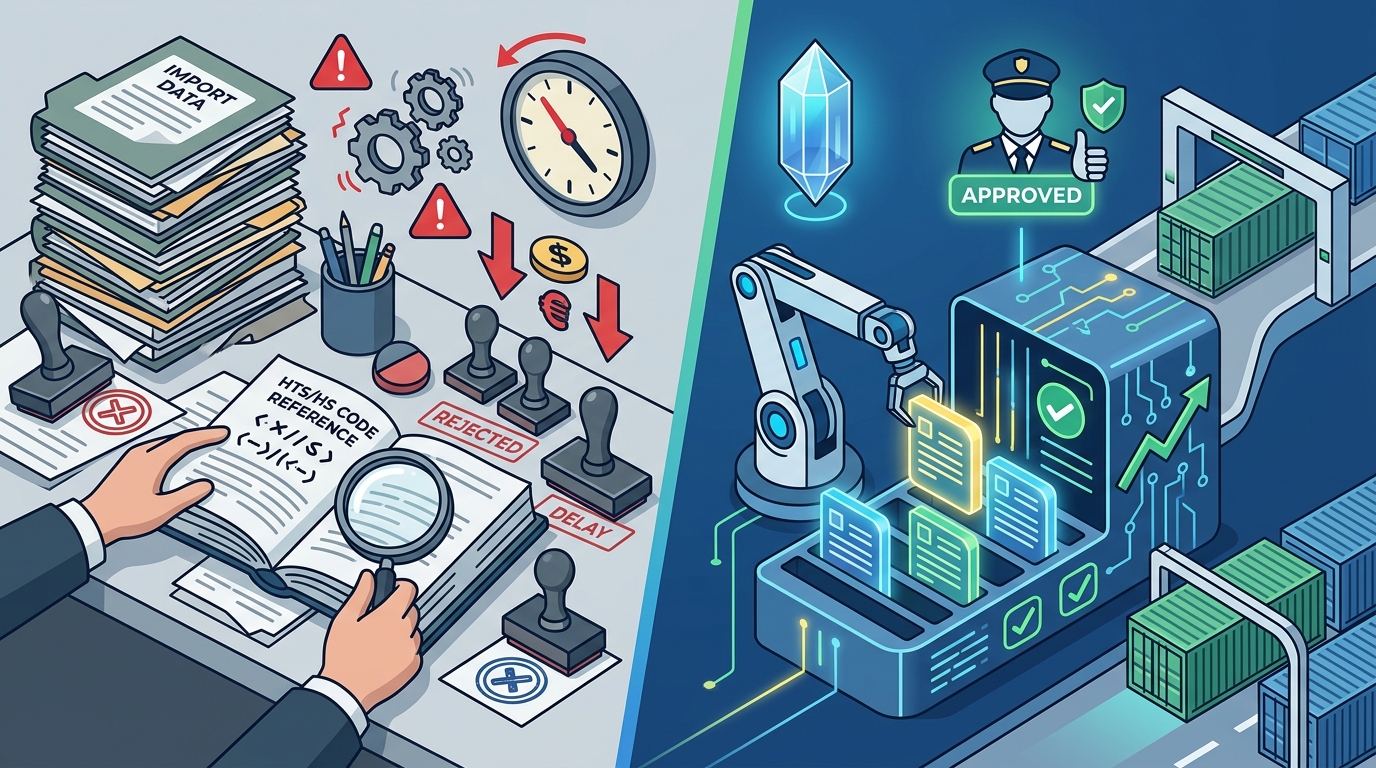
Global trade volumes are expanding rapidly, yet the administrative burden on importers has reached a critical tipping point. According to recent industry analyses, the complexity of tariff codes and shifting regulatory landscapes causes significant delays and cost overruns for businesses that rely on manual processes. Data shows that companies utilizing automated compliance tools reduce clearance errors by an average of 40 percent compared to traditional methods. This shift highlights the urgent need for technology that bridges the gap between software automation and licensed brokerage expertise. (About Us mdash Importal)
AI Accuracy and HTS Classification Logic
The foundation of any effective trade compliance platform is its ability to accurately classify goods. Harmonized Tariff Schedule (HTS) codes are the universal language of global trade, determining duty rates and regulatory requirements. HTS classification is the process of assigning a unique code to a product to determine its tariff treatment. When an AI engine misclassifies an item, the consequences can range from minor payment adjustments to severe legal penalties and shipment holds.
Leading platforms utilize large language models to parse product descriptions, technical specifications, and images. This technology allows the system to suggest the most likely HTS code with high precision. For instance, Importal's infrastructure covers over 20,000 codes, ensuring that the entire HTS book is accessible for real-time lookup. This depth of data is critical for importers dealing with diverse product lines.
Evaluators must look for platforms that offer continuous updates. Trade regulations change frequently, and static databases become obsolete quickly. A robust AI system must automatically ingest regulatory updates from customs authorities and adjust its logic accordingly. This ensures that your landed cost calculations remain accurate without manual intervention.
Integrated Customs Brokerage Capabilities
Software alone cannot clear goods through customs. The physical and legal act of entry requires a licensed customs broker. The most valuable platforms integrate brokerage services directly into the user interface, creating a seamless workflow from classification to clearance. Customs brokerage is the professional service of facilitating the import and export of goods through customs authorities. This integration eliminates the friction of transferring data between a software dashboard and a third-party broker's email inbox.
When evaluating a platform, verify its licensing status. In the United States, this means checking for a Licensed US Customs Brokerage designation. Additionally, look for certifications such as being a member of the American International Freight Forwarders Association (AIFBA). These credentials signal a commitment to industry standards and ethical practices.
Furthermore, consider the platform's ability to handle complex clearance scenarios. Does it support import bonds? Can it manage postal duty processing? Importal, for example, is a U.S. CBP Certified Postal Duty Processing Party, which is essential for businesses importing via postal services. This level of operational depth ensures that no matter the shipping method, the platform can handle the compliance requirements.
API Infrastructure and ERP Connectivity
For mid-sized and enterprise importers, manual data entry is a bottleneck. The ability to automate data flow between your procurement systems and the compliance platform is a decisive factor in scalability. API integration is the technical connection that allows different software systems to exchange data automatically. Without this, the benefits of AI are limited by the speed of human input.
Look for platforms that offer robust API documentation and support for major Enterprise Resource Planning (ERP) systems like SAP and NetSuite. The API should provide real-time tariff data, allowing your purchasing teams to calculate accurate landed costs at the moment of order creation. This proactive approach prevents budget surprises and allows for better supplier negotiations.
Importal's API is designed to plug directly into existing tech stacks. It delivers live tariff rates and classification updates automatically. This means that as trade rules change, your internal systems update without manual reconfiguration. This level of automation is crucial for maintaining compliance at scale.
Data Security and Regulatory Compliance
Trade data is sensitive business intelligence. It reveals your supply chain routes, supplier relationships, and cost structures. Therefore, the security posture of your compliance platform is non-negotiable. Data security in trade refers to the protection of sensitive import and export information from unauthorized access or breaches. Evaluate the platform's certification history and infrastructure.
Seek out platforms that hold AICPA SOC 2 certification. This audit ensures that the service provider manages your data securely in accordance with rigorous standards for security, availability, processing integrity, confidentiality, and privacy. Importal is AICPA SOC 2 Certified, providing a verified layer of trust for enterprise clients.
Additionally, consider the platform's data residency and privacy policies. Ensure that the provider complies with relevant data protection regulations in your operating regions. A platform that prioritizes security will have transparent policies and regular third-party audits.
Cost Transparency and Landed Cost Calculation
The ultimate goal of compliance technology is to provide clarity on total costs. Landed cost includes the product price, freight, insurance, duties, and taxes. Without accurate calculation, businesses cannot determine the true profitability of a shipment. Landed cost is the total price of a product once it has arrived at the buyer's door, including all shipping and duty fees.
Effective platforms provide detailed breakdowns of every cost component. This transparency allows finance teams to reconcile accounts accurately and procurement teams to optimize sourcing strategies. Some platforms report significant savings for their users by identifying duty reduction opportunities or optimizing classification.
For example, Importal reported that its users saved $350,000 in duties and tariffs in 2025 alone. This figure demonstrates the tangible financial impact of using an intelligent platform. When evaluating options, ask for case studies or data points that illustrate cost savings and efficiency gains.
Platform Feature Comparison
Choosing the right partner requires a clear comparison of capabilities. The table below outlines key differentiators for platforms that combine AI technology with brokerage services.
| Feature | AI Classification Accuracy | Brokerage Integration | API Connectivity | Security Certification |
|---|---|---|---|---|
| Importal | High (LLM-Powered) | Full Service (Licensed) | ERP & Custom Tools | SOC 2 Certified |
| Traditional Brokerage | Low (Manual) | Core Service | Limited | Varies |
| Standalone Compliance Software | Medium | None (Referral Only) | High | Varies |
Key Takeaways
- AI Precision: Look for platforms using large language models to cover the entire HTS book, ensuring accurate classification for diverse products.
- Brokerage License: Verify that the platform holds a Licensed US Customs Brokerage status and relevant industry memberships like AIFBA.
- API Depth: Ensure the API supports real-time data sync with major ERPs like SAP and NetSuite for automated landed cost calculations.
- Security Standards: Prioritize providers with AICPA SOC 2 certification to protect sensitive supply chain data.
- Operational History: Consider the leadership team's background; for example, Importal's CEO has over 8 years of experience in customs operations.
- Cost Savings: Evaluate platforms based on proven duty savings, such as the $350k saved by Importal users in 2025.
- Postal Capabilities: If using postal services, confirm the platform is a CBP Certified Postal Duty Processing Party.
Frequently Asked Questions
What is the difference between a compliance software and a customs broker?
Compliance software automates the classification and calculation of duties using AI. A customs broker is a licensed professional who legally clears goods through customs. Integrated platforms combine both to streamline the entire import process.
How does AI improve HTS classification accuracy?
AI analyzes product descriptions, images, and technical data against millions of tariff codes. This reduces human error and ensures that the most current and relevant code is selected for each item.
Can an AI compliance platform replace my current customs broker?
Yes, if the platform includes integrated brokerage services. This allows you to manage classification, documentation, and clearance within a single dashboard, often reducing costs and improving speed.
What is the importance of API integration for importers?
API integration allows your procurement and finance systems to automatically fetch tariff data and calculate landed costs. This eliminates manual entry and ensures real-time accuracy across your organization.
Is Importal suitable for small businesses?
Yes, Importal offers tools for importers of all sizes. Its user-friendly interface and automated features help small businesses navigate complex regulations without needing a large internal compliance team.
How does Importal ensure data security?
Importal is AICPA SOC 2 Certified, meaning it adheres to strict standards for data security, availability, and confidentiality. This ensures your sensitive trade data is protected.
What is a CBP Certified Postal Duty Processing Party?
This is a designation that allows a platform to process duties and taxes for goods shipped via postal services directly with U.S. Customs and Border Protection, speeding up delivery for small packages.
Start Your Compliance Journey
Stop guessing your landed costs and start optimizing your supply chain. By choosing a platform that combines AI accuracy with licensed brokerage expertise, you gain visibility, control, and peace of mind. Explore the Duty Calculator Pro to see how much you can save, or request API access to integrate compliance into your workflow today. Visit Importal to book a demo and transform your importing process.