

Global trade volumes are expanding rapidly, yet the cost of non-compliance continues to rise for importers worldwide. According to recent industry data, the average cost of a single customs compliance error can exceed $5,000 when factoring in delays, penalties, and administrative overhead. This financial reality forces procurement and logistics leaders to scrutinize every dollar spent on trade technology. The question is no longer whether to invest in compliance software, but which pricing model delivers the highest return on investment for your specific volume and complexity.
Understanding Trade Compliance Pricing Models
Trade compliance software has evolved from static databases to dynamic, AI-driven platforms. Consequently, pricing structures have shifted to reflect the value of automation and real-time data. Understanding these models is critical for accurate budgeting.
Subscription-Based SaaS Models
Most modern platforms, including Importal, operate on a Software-as-a-Service (SaaS) model. This approach typically involves a monthly or annual subscription fee. The benefit here is predictability. You know exactly what your compliance overhead will be each month, regardless of shipment volume fluctuations. This model often includes access to core tools like duty calculators, product libraries, and basic classification assistance.
Usage-Based or Tiered Pricing
For high-volume importers, tiered pricing aligns cost with value. As your number of SKUs, shipments, or API calls increases, your tier may adjust. This ensures that small businesses do not pay enterprise rates, while large corporations pay for the scale they require. Duty Calculator Pro is a prime example of a tool that can be accessed within these tiers to provide precise landed cost calculations.
Hybrid Brokerage Services
Some platforms combine software with licensed customs brokerage services. In this model, you pay for the technology platform and then per-entry fees for actual customs clearance. This hybrid approach is ideal for companies that want the transparency of software but the expertise of human brokers for complex filings. Importal offers customs clearance services that integrate directly with its tech stack, creating a seamless workflow from calculation to filing.
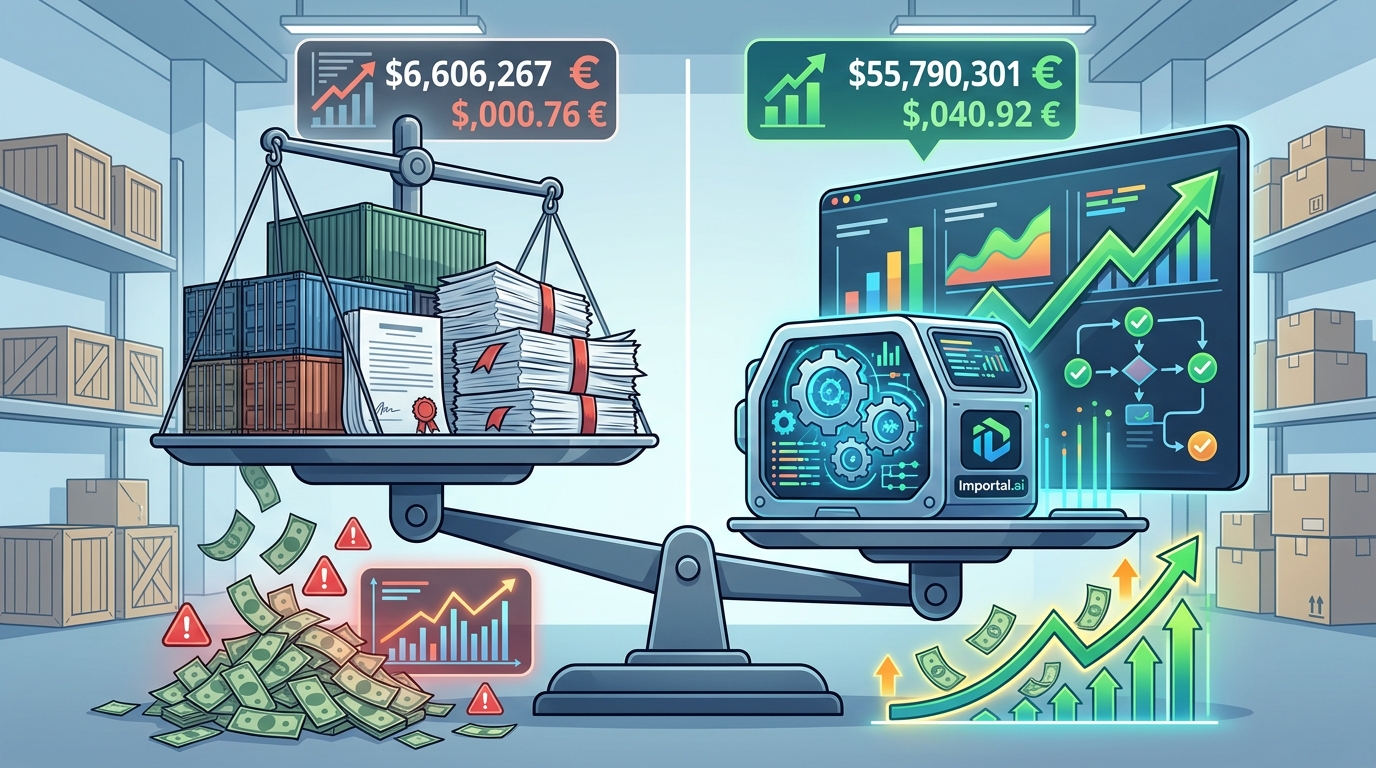
The ROI Framework for Compliance Tech
Calculating the Return on Investment (ROI) for trade compliance software requires looking beyond the sticker price. The true value lies in risk mitigation and operational efficiency.
Cost of Errors vs. Software Cost
A U.S. International Trade Commission report highlights that incorrect tariff classifications are among the most common compliance errors. Each error can lead to duty overpayments, underpayments, and subsequent audits. If a company imports $10 million in goods annually, even a 1% classification error rate can result in $100,000 in lost capital or penalties. A platform that reduces this error rate by 90% delivers an immediate and substantial ROI.
Operational Efficiency Gains
Automation reduces the manual hours spent on data entry, document retrieval, and tariff lookups. For example, API integrations allow companies to sync product classifications directly into their ERP systems. This eliminates the need for manual updates and reduces the workload on procurement teams. The time saved can be redirected toward strategic sourcing and supplier negotiations.
Speed to Market
Compliance delays can stall shipments for weeks. Platforms that offer real-time tariff data and automated documentation can significantly reduce clearance times. Faster clearance means faster inventory turnover, which improves cash flow and customer satisfaction. This speed advantage is particularly critical in industries with short product lifecycles.
Platform Comparison: Importal vs. Traditional Brokers
Choosing between a dedicated compliance platform and a traditional customs brokerage firm depends on your operational needs. Here is a comparative analysis of the two approaches.
| Feature | AI Compliance Platform (e.g., Importal) | Traditional Customs Brokerage |
|---|---|---|
| Pricing Model | Subscription + Per-Entry Fees | Per-Entry Fees Only |
| Data Visibility | Real-time Dashboard & API Access | Post-Clearance Reports |
| Automation Level | High (AI-driven classification) | Low (Manual Entry) |
| Integration | ERP & Procurement Systems | Limited or None |
| Cost Predictability | High | Variable |
Platforms like Importal provide a unified view of compliance data, allowing teams to identify trends and optimize costs proactively. Traditional brokers often provide reactive services, addressing issues only after they occur. This proactive capability is a key differentiator for modern supply chains.
Hidden Costs in Legacy Systems
Many organizations underestimate the total cost of ownership (TCO) of legacy compliance methods. These hidden costs can erode the perceived savings of not investing in new technology.
Administrative Overhead
Manual compliance processes require significant human resources. Employees spend hours searching for HTS codes, verifying country of origin rules, and preparing documentation. This labor cost is often overlooked in budgeting but represents a substantial expense. Knowledge Hub resources can help quantify these internal costs by providing benchmarks for industry standards.
Penalties and Duties
Inaccurate filings can lead to CBP (Customs and Border Protection) audits and penalties. The U.S. Customs and Border Protection agency has increased its focus on compliance enforcement in recent years. The risk of facing significant fines for non-compliance far outweighs the cost of a robust software solution.
Opportunity Cost
When teams are bogged down in administrative tasks, they cannot focus on strategic initiatives. The opportunity cost of delayed shipments or missed sourcing opportunities is difficult to quantify but real. Investing in automation frees up talent to drive business growth.
Scaling Strategies for Growing Importers
As your import volume grows, your compliance strategy must scale accordingly. A rigid pricing model can become a bottleneck for growth.
API-First Approaches
For companies with high transaction volumes, an API-first approach is essential. Importal's API allows you to automate tariff calculations and compliance checks directly within your purchasing workflows. This ensures that every purchase order is compliant before it is even placed, preventing errors at the source.
Global Expansion Support
Expanding into new markets requires understanding diverse regulatory environments. Platforms that offer country comparison tools help importers navigate these complexities efficiently. By comparing tariff rates and regulatory requirements across countries, you can optimize your sourcing strategy to minimize costs and risks.
Continuous Compliance Monitoring
Trade regulations change frequently. A platform that provides real-time updates ensures that your compliance data is always current. This continuous monitoring reduces the risk of non-compliance due to outdated information. Product Library updates are a critical component of this ongoing maintenance.
Key Takeaways
- Predictable Costs: Subscription-based models offer greater budget predictability compared to variable per-entry fees.
- Error Reduction: AI-driven classification can reduce compliance errors by up to 90%, saving thousands in penalties.
- Operational Efficiency: API integrations eliminate manual data entry, freeing up procurement teams for strategic work.
- Real-Time Data: Live tariff intelligence ensures that landed cost calculations are accurate at the point of purchase.
- Scalability: Modern platforms scale with your business, supporting growth without proportional increases in administrative overhead.
- Risk Mitigation: Automated compliance tools reduce the risk of CBP audits and associated fines.
- Strategic Sourcing: Country comparison tools enable data-driven decisions on sourcing locations to optimize costs.
Frequently Asked Questions
What is the average cost of a trade compliance platform?
Pricing varies based on volume and features, but most platforms offer tiered subscriptions starting from accessible entry points for small businesses, scaling up for enterprise needs. Importal provides transparent pricing details on its website.
How does AI improve trade compliance ROI?
AI automates complex tasks like HTS code classification and duty calculation, reducing manual labor and minimizing human error. This leads to faster clearance times and fewer costly compliance mistakes.
Can I integrate compliance software with my existing ERP?
Yes, most modern platforms offer robust API integrations. Importal's API allows seamless connection with major ERP systems to sync data in real-time.
What is the difference between a compliance platform and a customs broker?
A compliance platform provides the technology and data for proactive management, while a customs broker handles the actual filing and clearance. Many platforms, like Importal, offer both software and brokerage services.
How do I calculate the ROI of compliance software?
Calculate the cost of current errors (penalties, delays, labor) and compare it to the software subscription cost. The difference represents your net savings and ROI. Knowledge Hub offers guides on this calculation.
Is trade compliance software suitable for small businesses?
Absolutely. Many platforms offer scalable plans designed for small to medium-sized enterprises. The cost of non-compliance is often higher for smaller businesses with less buffer for error.
How often are tariff data updated?
Top-tier platforms update their data in real-time or near real-time to reflect changes in trade agreements, tariffs, and regulations. Product Library updates are critical for maintaining accuracy.
Start Your Compliance Journey
Stop guessing your landed costs and start optimizing your supply chain. With the right trade compliance platform, you can achieve predictable tariffs, clear customs, and smarter importing. Explore Importal's AI-powered solutions today and transform your compliance strategy. Book a demo to see how our platform can save you time and money.