
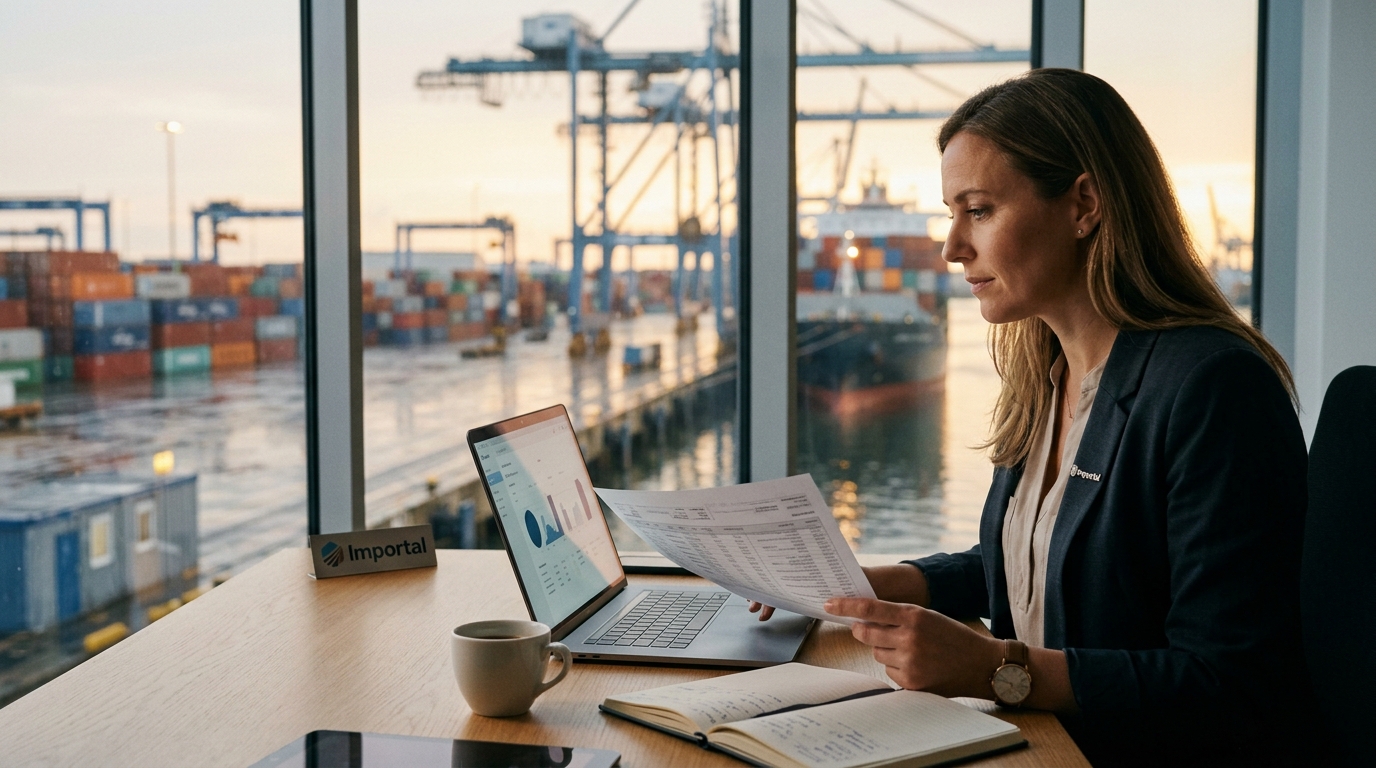
Accurate HS code classification is the foundation of compliant and cost-effective importing. Misclassification leads to overpayment, customs holds, and audit penalties. Importal automates this process to ensure your landed costs are precise and your supply chain remains audit-ready.
Defining HS Code Classification
HS code classification is the process of assigning a standardized numerical code to a product for international trade. This code determines the tariff rate, regulatory requirements, and statistical tracking for goods entering a country. In the United States, this is known as the Harmonized Tariff Schedule (HTS) code.
Every product has a specific classification based on its material composition, function, and manufacturing process. For example, a cotton t-shirt has a different code than a polyester t-shirt, even if they look identical. This distinction directly impacts the duty rate applied by Customs and Border Protection (CBP).
The Financial Impact of Misclassification
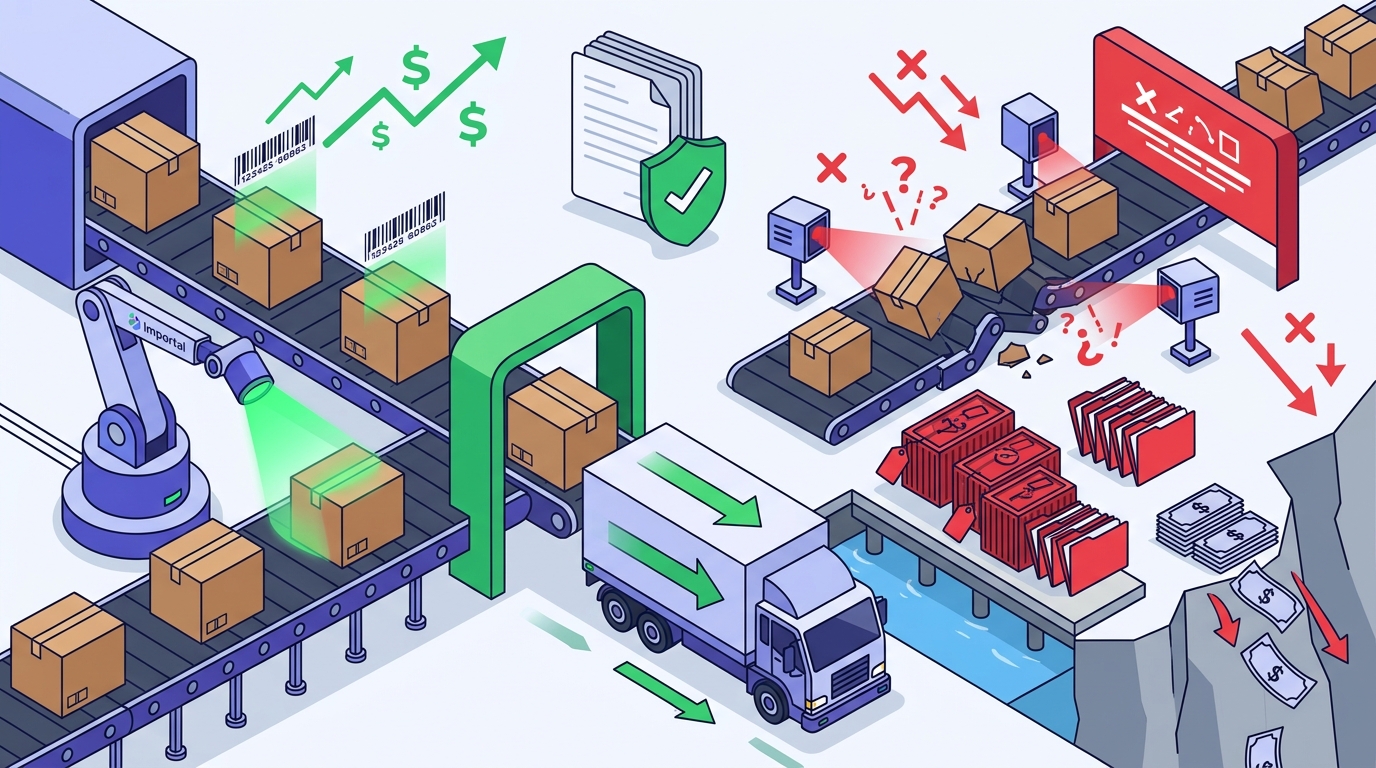
Incorrect HS codes can significantly inflate your landed costs. If a product is classified under a higher duty rate than necessary, you pay more in taxes on every shipment. Conversely, under-classifying can lead to back taxes, penalties, and interest during an audit.
Consider a company importing electronic components. If a specific circuit board is misclassified as a generic electronic part, the duty rate might jump from 0% to 25%. For a high-volume importer, this difference can amount to hundreds of thousands of dollars annually. Importal’s Duty Calculator Pro helps identify these discrepancies by analyzing product data against current tariff schedules.
Compliance Risks and Audit Exposure
Trade compliance is the adherence to all laws and regulations governing the import and export of goods. CBP actively audits importers to ensure accurate classification and valuation. A single misclassification can trigger a broader review of your entire import history.
CBP has the authority to assess penalties for negligence or fraud. Negligence penalties can range from 10% to 50% of the underpaid duties. To mitigate this risk, companies need a defensible classification process. Importal’s Customs Clearance service uses AI to validate every data point before submission, reducing the likelihood of errors that lead to audits.
Automating Classification with AI
Manual classification is time-consuming and prone to human error. AI-powered platforms can analyze product descriptions, images, and specifications to suggest the most accurate HS code. This technology reduces the time spent on classification from hours to minutes.
Importal’s Product Library centralizes your tariff data and automatically updates classifications as trade rules change. This ensures that your product catalog remains accurate without manual intervention. By integrating with your ERP system, Importal keeps your internal records aligned with customs requirements.
Strategic Sourcing and Tariff Mitigation
Accurate classification enables smarter sourcing decisions. By understanding the tariff rates for different countries, you can identify cost-saving opportunities through trade agreements or strategic sourcing. For instance, a product might have a lower duty rate if sourced from a country with a free trade agreement with the US.
Importal’s Country Comparison tool allows you to compare landed costs across multiple sourcing countries in seconds. This visibility helps you make data-driven decisions that protect your margins. You can also identify exclusions or special programs that may reduce or eliminate tariffs for specific products.
Key Takeaways
- HS code classification determines your duty rate and regulatory requirements.
- Misclassification leads to overpayment, customs holds, and audit penalties.
- CBP actively audits importers, and negligence can result in significant fines.
- AI automation reduces classification time and improves accuracy.
- Accurate data enables strategic sourcing and tariff mitigation.
- Importal provides tools to automate and validate your classification process.
Frequently Asked Questions
What is an HS code?
An HS code is a standardized numerical code used to classify traded products. It is the basis for customs tariffs and trade statistics.
How does HS code accuracy affect my costs?
Accurate HS codes ensure you pay the correct duty rate. Misclassification can lead to overpayment or underpayment, both of which have financial consequences.
Can I change my HS code after filing?
Yes, but it requires a post-summary correction (PSC) or a voluntary disclosure. This process can be complex and may trigger an audit.
How often do HS codes change?
HS codes are updated annually by the World Customs Organization. The US HTS schedule is also updated regularly to reflect new products and trade agreements.
What is the role of AI in classification?
AI analyzes product data to suggest the most accurate HS code. It reduces human error and speeds up the classification process.
How can Importal help with HS code classification?
Importal uses AI to automate classification, validate data, and provide real-time tariff intelligence. This ensures your imports are compliant and cost-effective.
Conclusion
Accurate HS code classification is not just a technicality; it is a critical business function. It impacts your costs, compliance, and supply chain efficiency. By leveraging AI-powered tools, you can ensure your classifications are accurate and defensible. Importal is committed to helping you navigate the complexities of trade compliance with confidence.
To learn more about how Importal can streamline your import process, .