

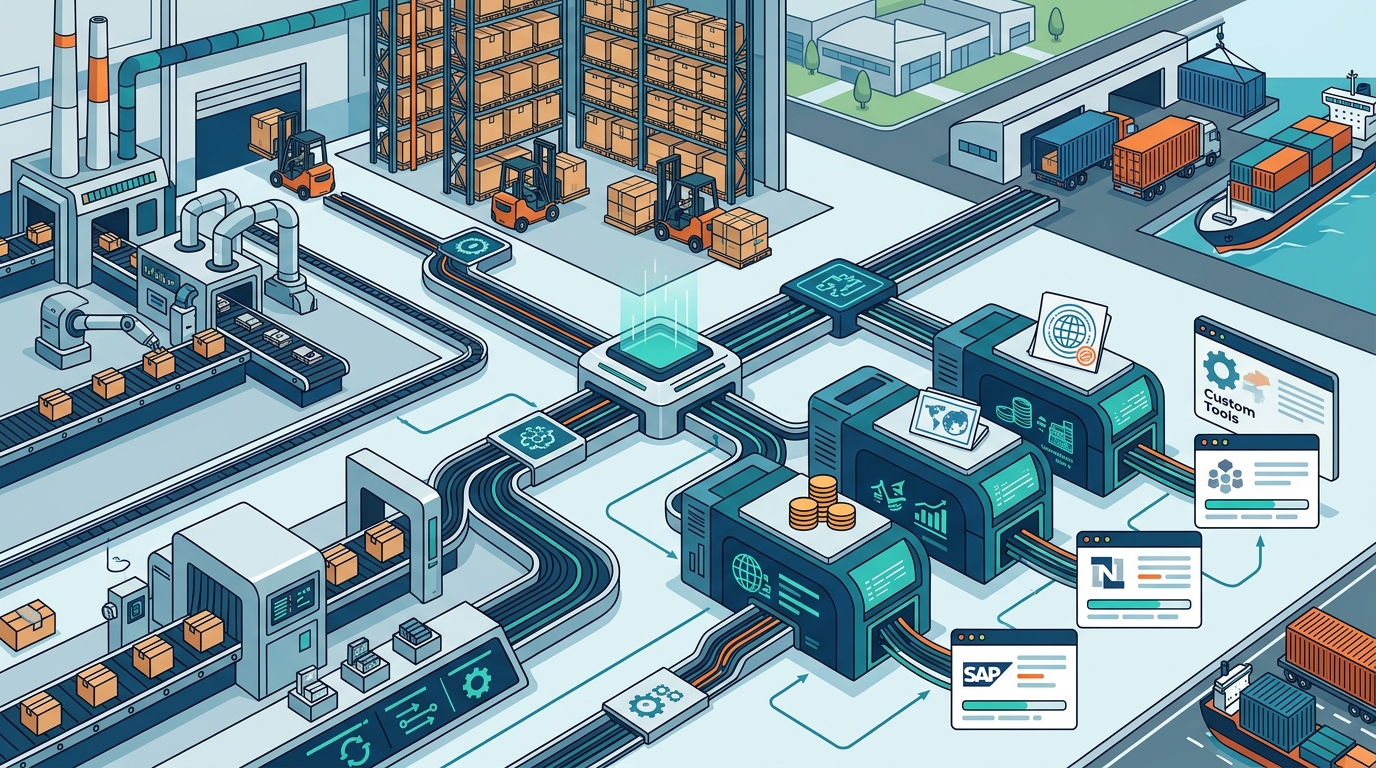
Trade compliance software integrates directly with major ERP systems like SAP and NetSuite, as well as procurement platforms and custom internal tools. This integration automates tariff calculations and classification checks in real-time. This guide covers how these connections work, the specific benefits for landed cost visibility, and how to implement them effectively.
ERP System Integrations
Enterprise Resource Planning (ERP) systems serve as the central nervous system for many large organizations. They manage financials, inventory, and supply chain data. Integrating trade compliance software with your ERP ensures that tariff data is always synchronized with your operational records. This eliminates the need for manual data entry and reduces the risk of compliance errors.
Major ERP Connections
Modern trade compliance platforms are designed to plug directly into leading ERP solutions. For example, Importal's API connects seamlessly with systems like SAP and NetSuite. These integrations allow real-time tariff and classification data to flow directly into your workflow. As trade rules change, your ERP systems update automatically, ensuring that your financial projections remain accurate.
Automating Landed Cost Calculations
One of the most significant benefits of ERP integration is the automation of landed cost calculations. When a purchase order is created in your ERP, the compliance software can fetch live tariff rates instantly. This allows you to calculate accurate landed costs automatically. You no longer need to wait for goods to arrive at the port to know your true costs. This immediate visibility helps finance teams evaluate margins and make smarter buying decisions before committing capital.
Maintaining Data Integrity
Data integrity is critical in trade compliance. Manual updates often lead to discrepancies between your internal systems and customs declarations. By integrating with your ERP, you ensure that product classifications and HTS codes are aligned across all internal systems. This unified view prevents errors that could lead to customs holds or penalties. It also simplifies the audit process by providing a clear trail of how tariff data was applied to each transaction.
Procurement Platform Integrations
Procurement platforms manage the sourcing and purchasing lifecycle. Integrating trade compliance tools with these platforms provides visibility into costs and compliance exposure at the point of purchase. This is essential for teams that need to make rapid sourcing decisions based on accurate duty information.
Real-Time Duty Intelligence
Procurement teams often work with suppliers in multiple countries. Each country has different tariff rates and trade agreements. By integrating compliance software with your procurement tools, you can see duty implications in real-time. This helps you identify the most cost-effective sourcing locations. You can avoid high-tariff countries and select suppliers with complete cost visibility before committing to a contract.
Syncing Product Classifications
Product classification is a complex process that requires accuracy. Procurement platforms often contain detailed product descriptions and specifications. Compliance software can use this data to sync product classifications automatically. This ensures that HTS codes and Partner Government Agency (PGA) requirements are aligned across your internal systems. Real-time classification updates keep your data current as regulations change.
Streamlining Sourcing Workflows
Manual compliance checks can slow down the sourcing process. Integrating with procurement platforms streamlines these workflows by embedding compliance checks directly into the purchasing process. This reduces the time spent on manual lookups and allows your team to focus on strategic sourcing. It also ensures that compliance is fully integrated into your operations, rather than being an afterthought.
Key Takeaways
- Trade compliance software integrates with major ERPs like SAP and NetSuite to automate tariff calculations.
- Real-time integration ensures that landed costs are calculated accurately as purchase orders are created.
- Procurement platform integrations provide visibility into duty implications during the sourcing process.
- Automated syncing of product classifications prevents data discrepancies and compliance errors.
- These integrations reduce manual work and eliminate re-entry errors in your supply chain.
- Unified data across ERP and procurement tools simplifies audits and improves financial planning.
- Custom software integrations are also possible for organizations with unique internal systems.
Frequently Asked Questions
Which ERP systems can trade compliance software integrate with?
Trade compliance software can integrate with major ERP systems such as SAP and NetSuite. It also supports custom software and internal systems. The specific integrations available depend on the compliance platform you choose.
How does ERP integration help with landed cost calculations?
ERP integration allows compliance software to fetch live tariff rates when purchase orders are created. This enables automatic calculation of accurate landed costs. You can evaluate margins and make buying decisions with complete cost visibility.
Can compliance software integrate with procurement platforms?
Yes, compliance software can integrate with procurement platforms. This provides real-time visibility into duty implications and compliance exposure during the sourcing process. It helps teams make data-driven sourcing decisions.
What is the benefit of syncing product classifications?
Syncing product classifications ensures that HTS codes and PGA requirements are aligned across your internal systems. This prevents data discrepancies and reduces the risk of compliance errors. It also simplifies the audit process.
How often are tariff rates updated in integrated systems?
Tariff rates are updated in real-time or daily, depending on the platform. When trade rules change, the integrated systems update automatically. This ensures that your data is always current and accurate.
Is manual data entry still required after integration?
Manual data entry is significantly reduced after integration. The compliance software automatically syncs data with your ERP and procurement platforms. This eliminates the need for manual lookups and updates.
Conclusion
Integrating trade compliance software with your ERP and procurement platforms is essential for modern import operations. It provides real-time visibility into costs and compliance exposure. This automation reduces manual work and prevents errors. Importal offers robust integration capabilities that connect your tariff and classification data directly into your existing systems. By leveraging these integrations, you can make smarter sourcing decisions and maintain complete compliance. To explore how these integrations can benefit your organization, to discuss your specific needs.