

HS Codes Explained: Why Accurate Classification Matters for Importers
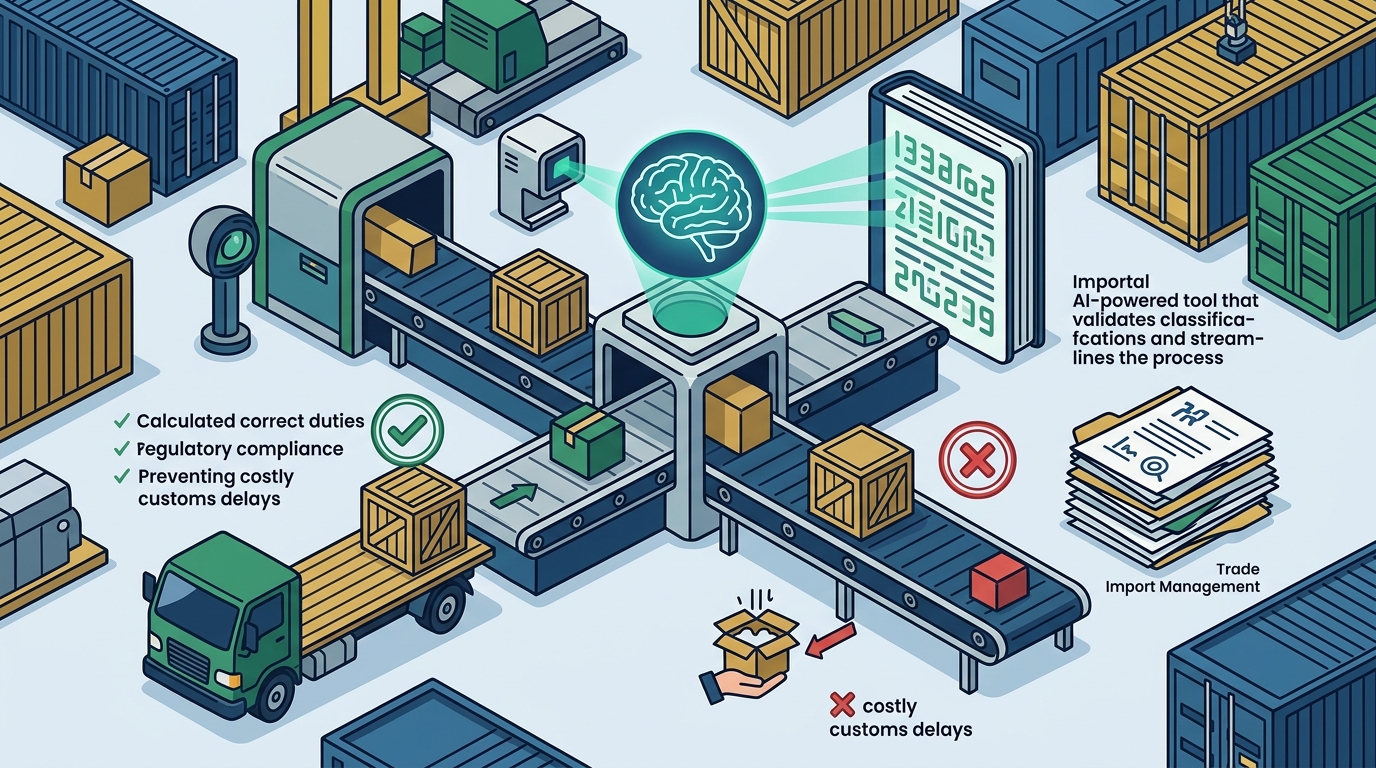
HS codes are the standardized numeric identifiers used globally to classify traded goods. For your import business, accurate HS code classification is the foundation of calculating correct duties, ensuring regulatory compliance, and preventing costly customs delays. Importal helps importers navigate this complexity by providing AI-powered tools that validate classifications and streamline the entire customs clearance process.
What Are HS Codes and How Do They Work?
The Harmonized System (HS) is an international nomenclature for the classification of products. It is the backbone of global trade, ensuring that goods are identified consistently across borders. An HS code is a 6-digit number that categorizes a product based on its material, function, and use. The first two digits represent the chapter, the next two represent the heading, and the final two represent the subheading.
In the United States, these codes are expanded to 10 digits, known as the Harmonized Tariff Schedule (HTS) codes. The additional four digits are country-specific and determine the exact duty rate and any applicable restrictions. Understanding this structure is critical because a single digit difference can change the duty rate from free to a significant percentage, directly impacting your landed costs.
Why Classification Accuracy Is Critical for Your Business
Accurate HS code classification is not just a bureaucratic requirement; it is a financial imperative. Misclassification can lead to underpayment of duties, which triggers penalties and interest from Customs and Border Protection (CBP). Conversely, over-classification can result in paying more than necessary, eroding your profit margins. The stakes are high, especially when dealing with complex products that could fall under multiple categories.
Consider a shipment of electronic components. If classified incorrectly, you might miss out on a trade agreement benefit or trigger a partner government agency (PGA) requirement that causes a hold. Importal’s AI platform addresses this by validating every data point before submission. This proactive approach ensures that your entries are clean, compliant, and free from the errors that lead to audits and surprise duty bills.
Common HS Code Mistakes to Avoid
Many importers make the mistake of relying on supplier-provided HS codes without independent verification. Suppliers may classify goods in a way that benefits their own export processes, which may not align with U.S. import regulations. Another common error is using outdated codes. Trade regulations change frequently, and a code that was correct last year may no longer be valid or may have a different duty rate today.
Additionally, importers often overlook the impact of country of origin on classification. The same product from different countries may be subject to different antidumping or countervailing duties. By using a tool like Importal’s Country Comparison feature, you can see tariff rates side by side across dozens of countries. This allows you to identify where your products qualify for savings and where to avoid high tariff exposure.
How Automation Simplifies HS Code Management
Managing HS codes manually is time-consuming and prone to human error. Automation transforms this process by integrating live tariff data directly into your workflow. Importal’s API plugs into your ERP or purchasing system, delivering real-time tariff and classification data. This means that as trade rules change, your systems update automatically, eliminating the need for manual lookups or spreadsheet maintenance.
The benefits of automation extend beyond speed. It provides complete visibility into your landed costs, allowing you to make smarter buying decisions. You can compare suppliers, evaluate margins, and eliminate surprise fees before you commit capital. This level of transparency is essential for modern importers who need to stay competitive in a rapidly changing trade environment.
How Importal Supports Your Compliance Strategy
Importal is the first AI-native customs broker built for companies that take compliance seriously. We combine licensed U.S. brokers with a proprietary AI platform that validates every data point before submission. Our team of experts is dedicated to making importing simpler, safer, and more predictable. We handle the heavy lifting by automating duties, fees, and HTS classifications, so you don’t have to.
Our platform includes a Product Library that centralizes all your tariff data, classifications, and history in one place. This catalog stays current automatically, tracking every tariff change and exclusion that affects your products. By using Importal, you gain a single source of truth for your compliance needs, ensuring that your team is always working with accurate, up-to-date information.
Key Takeaways
- HS codes are 6-digit global identifiers that are expanded to 10 digits in the U.S. to determine specific duty rates.
- Accurate classification is essential to avoid penalties, interest, and customs delays.
- Supplier-provided codes should always be independently verified for U.S. import compliance.
- Country of origin significantly impacts duty rates and regulatory requirements.
- Automation reduces human error and provides real-time visibility into landed costs.
- Importal’s AI platform validates data before submission to ensure clean, compliant entries.
Frequently Asked Questions
What is the difference between an HS code and an HTS code?
An HS code is a 6-digit international standard, while an HTS code is a 10-digit U.S. specific code. The first six digits are identical, but the last four digits determine the specific U.S. duty rate and restrictions.
Who is responsible for assigning the correct HS code?
The importer of record is ultimately responsible for the correct classification of goods. While suppliers may provide codes, it is the importer's duty to ensure they are accurate for U.S. customs purposes.
Can HS codes change over time?
Yes, HS codes are updated every five years by the World Customs Organization. Additionally, U.S. specific codes and duty rates can change more frequently due to trade agreements or regulatory updates.
How does Importal help with HS code classification?
Importal uses AI to validate classifications and provide real-time tariff data. Our platform automatically updates your product catalog when trade rules change, ensuring you always have the most current information.
What happens if I use the wrong HS code?
Using the wrong HS code can result in penalties, interest, and customs holds. It can also lead to audits and potential legal issues if the misclassification is deemed intentional.
Start Your Compliance Journey with Importal
Accurate HS code classification is the key to a successful import business. By leveraging the power of AI and expert brokerage, you can eliminate the guesswork and ensure that your shipments are always compliant. to learn how Importal can transform your trade compliance process and give you the clarity and confidence you need to grow your business.